150+ Classic Card Games Pack
- 4.4
- Rating
- 5.00M
- Installs
- Free
- Price
 Analysis by App-foxy
I opened 150+ Classic Card Games Pack expecting a straightforward collection of familiar card tables, and that is exactly where its appeal begins. This is not a game that tries to surround simple rules with a dramatic story or a complicated progression system. Its pleasure comes from sitting down, choosing a format, and getting into a focused round without much ceremony. I found that directness refreshing, especially when I wanted something quiet to play for a few minutes rather than another demanding mobile experience.
The collection is a free card game from Classic Card Game, with a 4.4 average from around 60 thousand ratings and more than 5 million installs. Those figures fit my overall impression: it is built for a broad audience, but it still works best for people who already enjoy traditional solo card games. The age rating is Teen, and the game is available for devices running Android 7.0 or later. Its current version is 7.48.0, so anyone using an older phone should check compatibility before getting attached to the idea of installing it.
A large collection that starts with a familiar table
My first impression was less about spectacle and more about recognition. The familiar card-table presentation makes the game easy to understand almost immediately. Instead of asking me to learn a fictional setting, follow a narrative, or unlock a character, it puts the focus on the cards themselves. That makes the opening moments pleasantly frictionless: I can choose a game, deal a hand, and start thinking.
You May Also Like

 Blood Strike: 2.5 Anniversary
Blood Strike’s Loadouts Turn Every Drop Into a Tactical Gamble
A close look at Blood Strike’s custom loadouts: how fast access to signature weapons reshapes its battle royale rhythm, rewards preparation, and narrows the gap between fights.

 Pandora - Music & Podcasts
Pandora’s Music Is Easy to Start, but Harder to Recover
Pandora’s strength is its low-effort path from a seed to a station. Its weak spot is how much confidence it asks you to place in connection, setup, and quiet recovery.

 8 Ball Pool
 Is Built on Rivalries, Rematches, and Routine
A close look at the rivalries, rematches, shared routines, and unanswered safety questions that turn a quick pool match into a persistent mobile community.

 Samsung Music
’s Quiet Strength Is Playing What You Already Own
Its reach comes less from spectacle than from dependable access to a personal library. That simplicity is both the app’s strongest retention engine and its ceiling.

 AccuWeather: Weather Radar
AccuWeather Review: A Quick, Clear Forecast for Everyday Decisions
For everyday plans, the best forecast is the one you can understand quickly. AccuWeather makes rain timing, radar, and local conditions easy to act on, with a few trade-offs.

 Hill Climb Racing
Why Hill Climb Racing Still Turns Crashes Into One More Run
A tiny car, a bumpy hill and one more upgrade: Hill Climb Racing keeps resurfacing because its simple chaos makes every near-miss feel personal.
More From Our News Desk



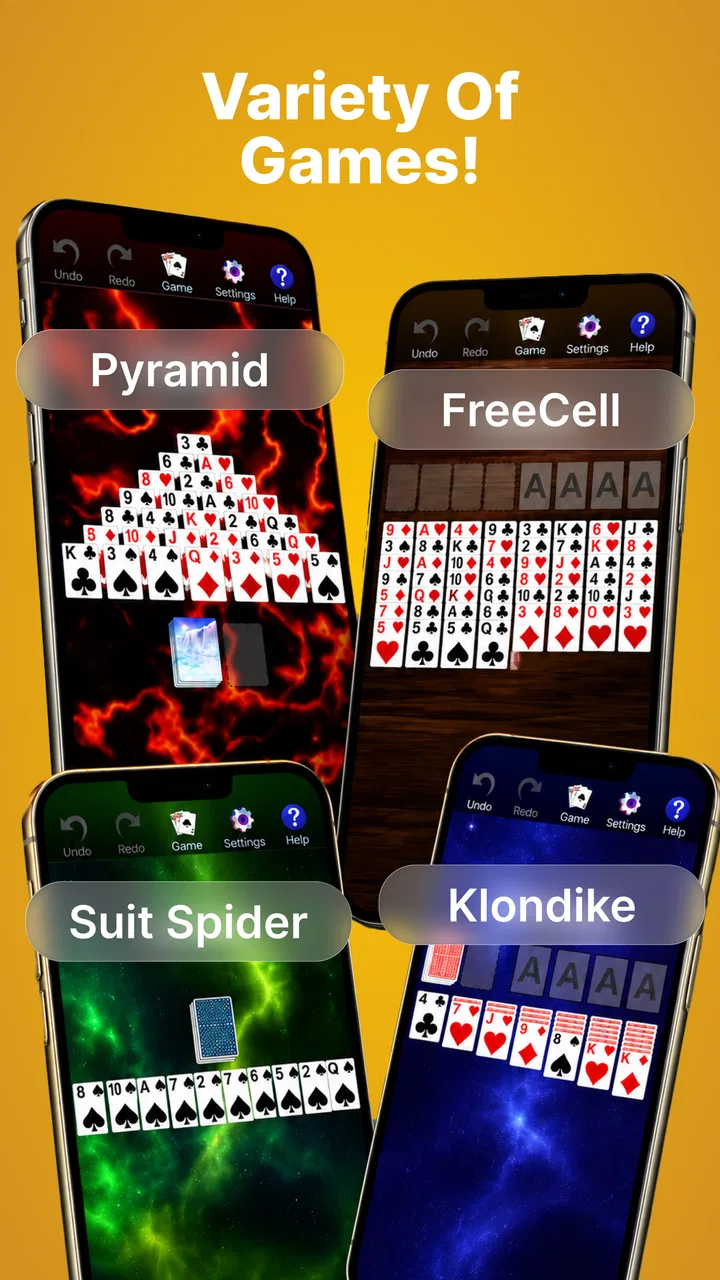
The collection includes well-known formats such as Classic Solitaire, Spider, and FreeCell, along with a wide variety of other card games. That range matters because these games do not create the same kind of concentration. Solitaire is an easy choice when I want a relaxed, recognizable routine. Spider demands more patience and planning, while FreeCell rewards a more deliberate approach because visible information makes each decision feel meaningful.
I would describe the visual direction as practical rather than expressive. Cards need to remain readable, and the table needs to stay calm enough that suits, ranks, and possible moves do not get lost in decoration. The restrained presentation supports the central mood: this is a quiet digital card table, not a theatrical game world. I appreciated that restraint when playing on a smaller screen, where excessive visual effects would have made the board harder to scan.
There is also a useful psychological advantage to the collection format. When one game begins to feel repetitive, I can move to another ruleset without leaving the same general environment. That makes the app more flexible than installing a separate title for every classic variation. At the same time, the breadth can make the experience feel less specialized. Someone seeking the deepest possible version of one particular card game may prefer a dedicated app designed entirely around that format.
My practical advice is to choose a small personal rotation rather than trying to explore everything at once. I started with the most familiar games, then added a more demanding option for longer sessions. This avoids turning the large selection into a menu problem and helps reveal which formats match different parts of the day.
The visual language keeps attention on decisions
Good card-game design is often noticed through what it avoids. Here, the table is meant to support quick recognition rather than compete with the hand. I could read the layout without feeling that the presentation was trying to become the main event. That is especially important in games where a single misplaced glance can lead to an unnecessary mistake.
The art direction also affects pacing. A busy interface would encourage me to rush through menus or spend time searching for controls. A quieter table makes the act of dealing and arranging cards feel more continuous. I found myself settling into a slower rhythm, checking available moves before committing instead of tapping through the board automatically.
That said, the same simplicity may feel plain to players who expect modern card games to offer animated boards, elaborate themes, or a strong sense of place. This pack does not seem aimed at that audience. Its setting is the card table itself, and its visual identity is built from familiarity and usability. If you want a fantasy tavern, competitive arena, or character-driven campaign, this is probably the wrong kind of card game for you.
One subtle strength is that the collection can serve different attention levels without changing its basic personality. I can use a familiar game as a mental reset, then switch to a format that asks me to plan several moves ahead. The setting remains stable while the mental texture changes. That consistency made the app feel more coherent than a random bundle of unrelated mini-games.
Sound and the feeling of a measured round
The audio experience is best understood as support for concentration rather than a performance of its own. In a card game like this, sound should help mark actions without interrupting thought. The overall mood I got from playing was subdued and functional, which suited the traditional material. I did not feel pushed toward frantic play or constant checking of a timer.
That measured rhythm is one of the collection’s strongest atmospheric qualities. A round can begin casually, become more thoughtful as the available moves narrow, and then end with a clear sense of completion. The pacing comes from the rules and the arrangement of the cards, not from dramatic events. This makes the game a good companion for short breaks, waiting rooms, or a quiet evening when I want something interactive but not socially demanding.
There is a trade-off here. Players who need strong audio feedback to make every action feel rewarding may find the experience understated. The pack’s mood depends more on visual order and familiar mechanics than on a rich soundscape. I see that as a reasonable choice for solitaire-style play, but it means the game is unlikely to satisfy someone looking for a highly produced audiovisual experience.
I also found that the slower rhythm makes it easier to use the collection as a break rather than a trap. Because the games are turn-based and self-contained, I can stop after a hand without feeling that I am abandoning a live match. That is a meaningful difference from online card alternatives, where another player’s presence can create pressure to continue or respond immediately.
Where the mechanics fit everyday play
The biggest mechanical advantage is variety within a familiar structure. Classic Solitaire gives me an approachable starting point, Spider changes the planning burden, and FreeCell encourages me to examine the whole layout before moving. These differences are enough to make the collection useful across several situations, even though every option remains rooted in traditional card play.
For example, I would use the easiest familiar format during a short commute or while waiting for an appointment. I would choose Spider when I had more time and wanted a puzzle that punished careless sequencing. FreeCell works well when I wanted visible information and a stronger feeling that my decisions, rather than pure luck, were shaping the result. This is more useful than simply saying the pack contains many games: the formats serve different moods and levels of attention.
The offline play advertised for the collection is particularly important in real use. I could treat it as a dependable distraction in places where a connection is inconvenient, rather than reserving it only for home. Offline access also reinforces the private, self-contained mood. There is no need to wait for an opponent or coordinate a session before beginning a round.
That strength comes with a clear limitation: solo card games cannot replace the tension of playing against a real person. If your main reason for opening a card app is bluffing, conversation, rankings, or head-to-head competition, this collection will not give you the same experience. I would choose an online multiplayer card game for that purpose, even if it meant accepting advertisements, matchmaking, or a more demanding pace.
Another useful way to approach the mechanics is to treat each round as a small exercise in decision quality. In Spider, I learned to avoid making a move merely because it was available; sometimes preserving flexibility was more valuable than creating an immediate sequence. In FreeCell, the visible layout made it worthwhile to think about empty spaces and future access before moving a card. These are simple habits, but they make the games feel more substantial than passive time-killers.
A realistic everyday scenario shows where the pack fits best. Suppose I have ten minutes before leaving for work and do not want to start a story game that will leave me searching for a stopping point. I can open a familiar solitaire table, play a few moves, and close the app without losing the shape of my morning. Later, on a longer train ride, I can switch to a more demanding variation and spend the journey planning rather than scrolling through short videos.
The collection is also a reasonable choice for someone returning to card games after years away. The rules of the recognizable formats provide a gentle re-entry, while the broader selection creates room to experiment. I would not recommend beginning by sampling every option randomly. It is more effective to learn the feel of one game, notice what kind of decisions you enjoy, and then move to a variation that changes that specific challenge.
Free access, version details, and the practical trade-offs
The game is free to download, which lowers the barrier to testing the collection. That is important here because the value depends on whether the included formats match your habits. I could try the basic experience before deciding whether it deserved a regular place on my phone. In-app purchases range from $1.99 to $69.99 per item, so I would pay attention during the purchase flow and avoid treating optional spending as part of the core requirement.
For me, the sensible approach is to evaluate the free experience over several different sessions. A card collection can feel enjoyable for one evening and repetitive by the third day, or it can become a reliable routine precisely because it does not change dramatically. I would ask whether I am using multiple formats and whether the offline option genuinely fits my schedule before considering any purchase.
The game was released on December 26, 2012, and that history helps explain its traditional identity. It does not feel built around whatever trend currently dominates mobile gaming. The current version, 7.48.0, keeps the product relevant for users who want a long-established style of card play, while the Android 7.0 minimum means it remains accessible to many older devices.
Still, a long-running classic collection is not automatically ideal for every player. People who want frequent novelty, seasonal events, narrative goals, or competitive ladders may find the basic loop too settled. Likewise, players who dislike repeating familiar rules will get more from a strategy game with a campaign or a modern deck-builder. I would skip this pack if my priority were discovery rather than dependable repetition.
Who will enjoy it most
I would recommend the collection to someone who wants a broad set of traditional solo card games in one place, especially if offline access matters. It suits players who enjoy gradually improving their decisions without needing a story, a team, or a live opponent. It is also a good fit for people who want to move between lighter and more analytical card formats while keeping a consistent, uncluttered mood.
I would be more cautious about recommending it to someone who needs a highly distinctive art style. The visual approach supports play, but it is not the main reason to install the game. The same applies to players who expect every round to introduce new content or a strong progression system. This is closer to a flexible digital card shelf than to a constantly evolving service.
One of my favorite aspects is how little preparation each session requires. I do not need to remember a plot, assemble a deck, or wait for another person. That makes the pack especially useful as a transition activity: something to do between larger tasks without demanding the same commitment as a full game. The downside is that its simplicity can expose repetition quickly if I play for long stretches every day.
The developer, Classic Card Game, has positioned the experience around recognizable formats rather than a single signature mechanic. That choice gives the app practical range, but it also means the quality of the experience depends on how much I enjoy the underlying traditions. The collection can broaden a card player’s routine, but it will not transform someone who dislikes solitaire-style games into a dedicated fan.
My atmosphere verdict after settling into the collection
After spending time with 150+ Classic Card Games Pack, I see it as a calm, dependable card table rather than a showpiece. Its art direction keeps the board readable, its sound and pacing support concentration, and its setting stays coherent because the cards remain the center of attention. The mechanics do the real expressive work: familiar formats create different moods without requiring a new world for each one.
The collection is at its best when I use it intentionally. Pick a quick, familiar game for a short pause; choose Spider when patience is available; turn to FreeCell when you want more control over the consequences of each move. That simple strategy makes the variety feel meaningful instead of decorative. The offline option strengthens the use case, particularly for travel and quiet moments away from a reliable connection.
Its weaknesses are equally clear. The presentation may feel modest beside more cinematic card games, solo play cannot provide the energy of a live opponent, and the traditional loop may become repetitive for anyone seeking constant novelty. The range of in-app purchase prices also means I would stay mindful of what I am paying for rather than assuming every extra is necessary.
Overall, I would recommend it to a friend who asked for a free, familiar card collection that can fill five minutes or a longer quiet session. I would not point a competitive player or a story-focused gamer toward it first. For the right audience, though, the strongest reason to keep it installed is its dependable change of pace: one app, several classic ways to think, and an atmosphere that lets the cards speak for themselves.
FAQs for 150+ Classic Card Games Pack
01What is 150+ Classic Card Games Pack?
150+ Classic Card Games Pack is a collection of traditional card games gathered into one mobile application. It is designed for players who enjoy familiar solitaire variations, patience games, and other classic card challenges without needing to install each title separately. The large selection makes it suitable for short sessions, casual play, or longer games when you want several different options available.
02Which card games are included in the app?
The pack includes more than 150 classic card games, although the exact selection may depend on the version, platform, and developer updates. Players can generally expect a broad range of solitaire and patience-style games, with different layouts, objectives, and difficulty levels. Before downloading, it is worth checking the store description or in-app game list to confirm that your preferred variations are available.
03Can I play 150+ Classic Card Games Pack offline?
Many card games in this type of collection can usually be played without a continuous internet connection, which is convenient for travel, commuting, or areas with unreliable mobile data. However, an internet connection may still be required for downloading the app, receiving updates, displaying certain advertisements, restoring purchases, or accessing optional online features. Offline availability can vary by device and app version.
04Is 150+ Classic Card Games Pack free to download and use?
The application may be available as a free download, but free access can include advertising, optional purchases, or limitations on certain features. Depending on the version, users might encounter banner or video ads, paid upgrades, or an option to remove advertisements. Review the current Google Play or App Store listing carefully so you understand the pricing model and any in-app purchase conditions before installing.
05Is the app suitable for beginners and experienced card-game players?
The collection is generally suitable for both newcomers and experienced players because it offers many game types rather than focusing on just one ruleset. Beginners can start with familiar, easier solitaire formats and learn gradually, while experienced users can explore less common variations and more demanding layouts. Interface options, hints, undo functions, scoring, and difficulty settings may differ between individual games.
Pros
- Includes over 150 classic card games in one app.
- Works offline
- making it useful without an internet connection.
- Simple controls are suitable for both beginners and casual players.
- Offers plenty of variety for short sessions or extended play.
- Usually requires less storage than installing multiple card-game apps.
Cons
- The large game selection can make finding a specific title difficult.
- Visuals and animations may feel dated compared with newer card apps.
- Some games may lack detailed tutorials for first-time players.
- Ads can interrupt play
- depending on the version and device.
- Advanced players may find limited customization and strategy options.

150+ Classic Card Games Pack
Gallery